

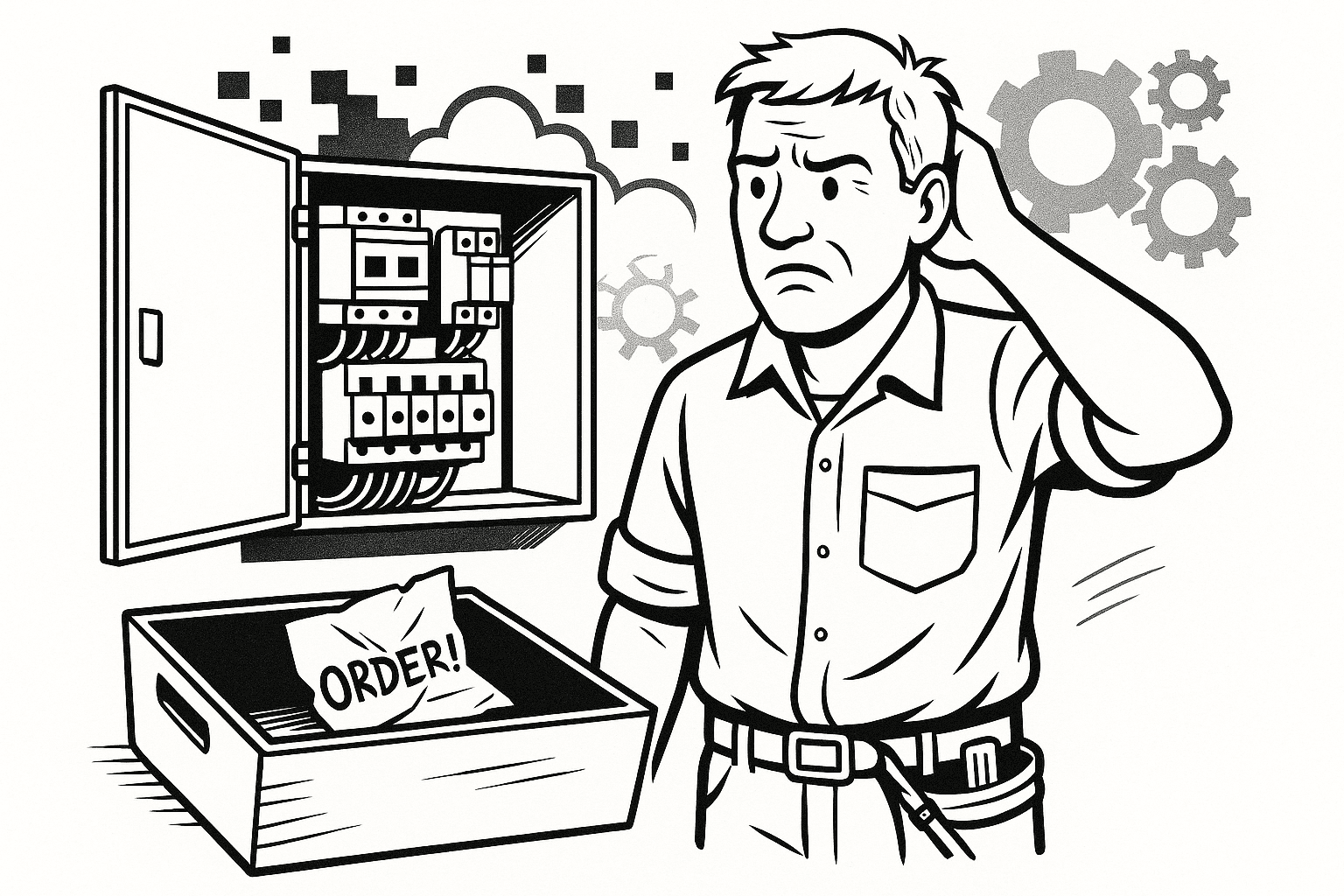
The Digital Gap in Craft Businesses: Why Procurement Gets Left Behind
A recent report by the Deutsche Handwerks Zeitung highlights a striking contrast: craft businesses are aware of the opportunities of digitalization, yet practical implementation lags far behind.
Where the gap is most visible
While areas like customer acquisition and invoicing are gradually moving online, procurement remains heavily analog. Many businesses still rely on sticky notes, phone calls, or email orders. The consequences:
- Lost time due to unplanned trips to suppliers
- Interrupted workflows on site when basic items are missing
- Lack of transparency on stock levels and costs
The cost of analog habits
Missing consumables like wire ferrules or screws don't just cause frustration. With hourly rates of €80 or more for skilled workers, each hour wasted on procurement runs translates directly into lost revenue. For small teams, this can quickly add up to several thousand euros per year.
Digital approaches as a solution
The tools are already available: auto-replenishment systems and central supplier integration help reduce manual steps and ensure that consumables arrive on time. These solutions don't require large IT departments – they are built for small businesses.
Conclusion
The gap between recognizing digital opportunities and actually implementing them is real. Closing it starts with procurement: less disruption, better cost control, and more time for productive work. Digital procurement is no longer optional – it's essential for staying competitive.