

When Material Shortages Become a Revenue Killer
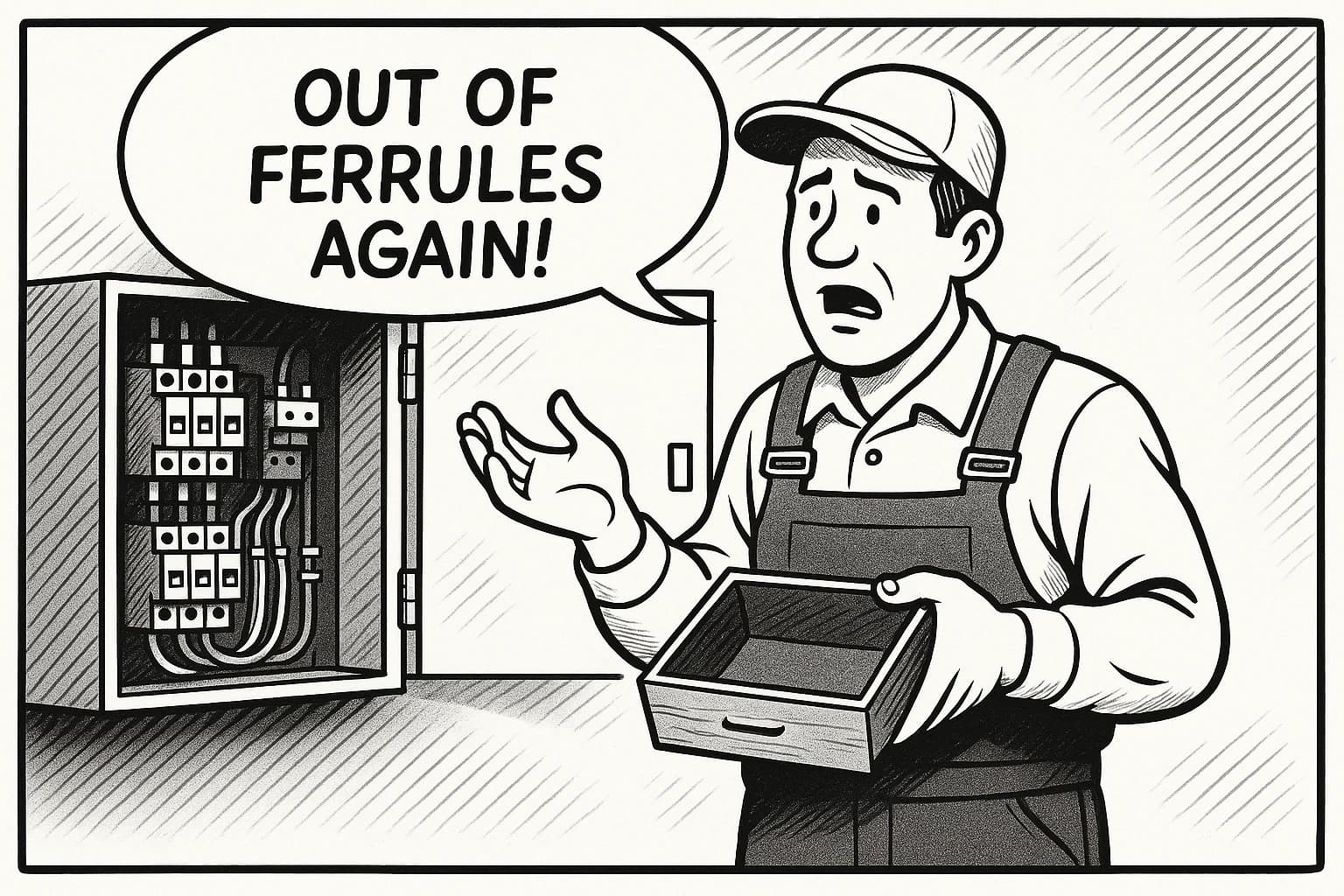
It's 4:30 PM on a Tuesday. Master electrician Thomas is standing in front of his client's control cabinet, reaching for the wire ferrules, but the box is empty. It's the third time this has happened this week. Now it's the same old story: stop work, get in the car, drive to the wholesale supplier, wait in line, pay, and drive back. Two hours are gone that he could have spent working productively.
Thomas is not an isolated case. In times of economic boom, German tradespeople regularly lose valuable hours procuring standard items. Time they urgently need to work through their full order books.
The Hidden Problem: Material Procurement Eats Up Work Hours
The situation is paradoxical: tradespeople have never been in higher demand than they are today. On average, customers in Germany have to wait almost ten weeks for a tradesperson, according to current industry data. At the same time, many businesses waste up to 3 hours per week on unplanned trips to the building supply store because they've run out of screws, clamps, or circuit breakers again.
The problem affects all trades:
- Electricians without wire ferrules and terminals
- HVAC technicians without fittings and seals
- Carpenters without screws and hardware
- Painters without filler and brushes
What's particularly frustrating is that it's usually the small, inexpensive consumables that cause the greatest loss of time.
What Does a Wasted Hour Really Cost?
The financial impact is more dramatic than many business owners think. In 2023, the average cost for a master craftsman's hour was already around €80.
Calculation Example:
- 3 hours of material procurement per week = approx. €240 in losses (master craftsman)
- 50 working weeks per year = €12,000 annual loss of revenue
But that's just the tip of the iceberg. During the time wasted on material procurement, no new jobs can be processed. With the current demand, this means not only lost revenue but also lost customers who turn to the competition.
The Economic Boom Trap: When Success Becomes a Problem
The current market situation exacerbates the problem:
- Full Order Books: 81% of trade businesses expect a good business situation in the next three months.
- Staff Shortages: Every wasted hour is doubly significant when there are already too few skilled workers.
- Time Pressure: Customers are already waiting for weeks. Further delays are poison for customer satisfaction.
The Hidden Costs of the "Just Quickly" Mentality
Many tradespeople underestimate the true costs of their improvised procurement strategy:
Direct Costs per Procurement Trip:
- Labor time: half an hour driving + half an hour for the purchase = €70
- Travel costs (flat rate): €25
- Incidental costs (parking, minor delays): €10
- Total: approx. €105 for a "quick" supply run
Indirect Costs:
- Interrupted workflows for other team members
- Delays in the project schedule
- Dissatisfied customers due to extended construction times
- Stress and demotivation within the team
Automated Stock Management: The Key to More Revenue
The solution is as simple as it is effective: smart systems for the automatic reordering of standard items. Instead of reacting ("Darn, all gone again"), items are proactively reordered before the stock runs out.
Benefits at a Glance:
- No more unplanned procurement trips
- Standard items always available on the construction site
- More time for productive work
- Happier customers through timely completion
- More relaxed work without constant material worries
Conclusion: Time is Money, Especially in the Trades
In the current economic boom, trade businesses can no longer afford to waste hours. Those who automate their stock management and always have standard items available gain several hours of productive work each week.
The math is simple: saving 3 hours per week with an hourly rate of €80 generates an additional €12,000 in revenue per year, just by better organizing material availability.
The question is not whether automated stock management is worth it. The question is: Can you afford to continue wasting time while your competition is completing more jobs?