When looking for a modern, mobile inventory management solution today, you almost inevitably come across Sortly. The US-based app has revolutionized the market for simple inventory management with its intuitive design. However, what works perfectly for a collector in California or a start-up in New York often reaches its limits in the daily routine of German trade businesses.
For trade businesses in Germany, Austria, and Switzerland (DACH region), there are specific requirements: data protection according to GDPR, seamless processes with local wholesalers, and above all, a solution that doesn't just manage inventory but actively reduces "ordering stress." In this detailed comparison, we examine why repleno is the logical Sortly alternative for Germany and which tool is best suited for which type of business.
Why the choice of the right app is crucial in 2026
The year 2026 marks a turning point for the trades. A shortage of skilled workers and increasing cost pressure are forcing businesses to radically streamline their processes. A warehouse that is "just there" is no longer enough. Every minute a highly paid craftsman spends searching for material or making an unplanned trip to the wholesaler directly reduces the business's profit.
The choice between a universal inventory app like Sortly and a specialized solution like repleno is therefore not a matter of taste, but a strategic decision about the efficiency of your material management.
Sortly is a world-leading inventory management app, particularly known for its visual user interface. Originally started as an app for private users to organize their household goods or collections, Sortly has evolved over the years into a powerful tool for small and medium-sized enterprises (SMEs).
The Strengths of Sortly
Sortly's main focus is on visual simplicity. Users can take photos of their items, scan QR codes or barcodes, and manage inventory via an appealing mobile app. It is a so-called "horizontal" solution. This means it is designed to be flexible enough for almost any industry. from hobbyists and retail to event management or the trades.
Sortly shines with an extremely simple setup. You download the app, take a few photos, scan a code, and you're done. For businesses that just want to know "What is where?", Sortly is an excellent digital shelf directory.
The Limits for German Tradespeople
The biggest disadvantage for the local market: Sortly is a US company. This not only means that server locations are primarily in the USA (which brings data protection challenges), but also that support and further development are focused on the American market. Special German workflows, such as automated communication with HVAC or electrical wholesalers, are completely missing. Furthermore, Sortly remains a passive inventory list at its core. It warns when stock is low, but it doesn't take the work of procurement off your hands.
What is repleno? Operational Warehouse Automation from Germany
repleno is not a classic inventory app, but a specialized inventory management solution for operational trades. Developed in Germany, repleno directly targets the pain points of businesses struggling with high material throughput and complex procurement paths every day.
The "Stock-driven" Concept
Unlike ERP systems, which often come from accounting, or inventory apps like Sortly, which purely map the status quo, repleno follows the "stock-driven" principle. The goal is not the perfect valuation of inventory for the balance sheet, but the guaranteed availability of material with minimal time effort.
Core Features of repleno
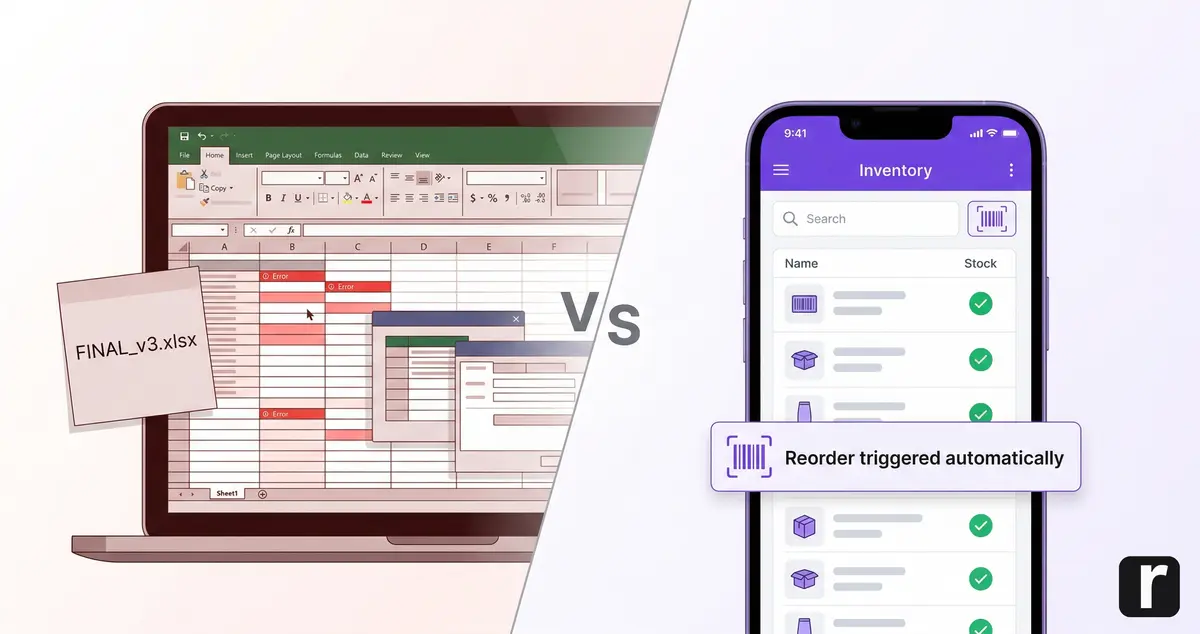
The most important unique selling point is automatic reordering. The system doesn't "sleep"; it acts proactively. When a technician takes the last pack of wall plugs from the shelf and scans it, repleno immediately recognizes: "We have fallen below the reorder point." Instead of just sending an email notification, repleno can place the item directly on the next collective order for the preferred wholesaler.
Furthermore, repleno is GDPR-compliant from the ground up. Data does not leave the German legal area, and support not only speaks German and English but also understands what a "delivery note" or a "construction site commission" is.
Feature Comparison: Sortly vs. repleno in Detail
To make the differences tangible, we have compared the most important criteria for trade businesses:
| Feature | Sortly | repleno |
|---|
| Language | English (App partially translated) | German & English |
| DACH Region Focus | Low (US Focus) | High (DACH-specific) |
| Auto-Reordering | No (Warning alerts only) | Yes (Fully automatic possible) |
| Barcode/QR-Scanning | Yes (Very visual) | Yes (Focused on speed) |
| Team Management | Yes (Seat-based) | Yes (Team inventory management) |
| Pricing | From approx. $29/month (seat-based) | From €25/month (no user limits) |
| Data Storage | USA | Germany / EU (GDPR) |
| Support | English | German & English |
| Mobile App | Yes (Native iOS & Android) | Yes (Modern Web-App / PWA) |
| Offline-Mode | Yes | No (planned) |
Deep Dive: Automation vs. Manual Maintenance
In Sortly, after a warning message, you still have to manually decide: Where do I order? Which price applies? Who sends the email? In repleno, you store this information once. The system becomes a digital employee who takes over the routine tasks of procurement.
Deep Dive: Data Protection and Legal Certainty
Since the end of the "Privacy Shield," data transfer to the USA has been legally risky for European companies. Anyone maintaining customer data or employee lists in US apps is often moving in a legal gray area. repleno eliminates this risk through purely German hosting.
Who should use Sortly?
Sortly is an excellent choice for businesses and scenarios where purely visual documentation is the priority.
Use Sortly if:
- You want to keep a visual inventory list of your high-value equipment (machines, tools).
- The look and feel of the app is more important to you than reordering automation.
- You have many items that can only be identified by a photo (e.g., decorative items, unique pieces).
- You primarily operate in the English-speaking area or the GDPR issue is secondary to you.
Sortly is a fantastic "digital eye" for your warehouse. It shows you what you have, but it doesn't help you get what's missing.
Who should use repleno?
repleno is the right choice for trade businesses that want to achieve real efficiency gains and minimize administrative effort in the office.
Use repleno if:
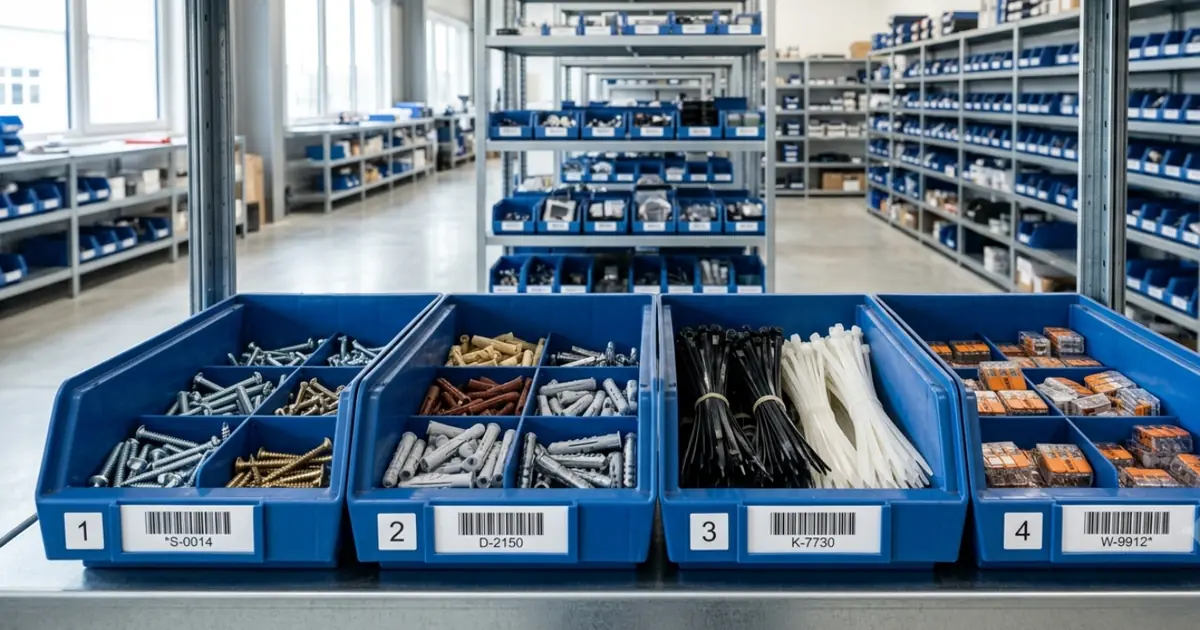
- You move consumables (screws, fittings, cables) every day that must always be available.
- You hate "ordering stress" on Friday evenings and want to automate reorders.
- Legal certainty and GDPR compliance are important to your business (and your customers).
- You are looking for a solution that technicians can operate intuitively without long training sessions.
- You value professional support and a close connection to the processes of the DACH trades.
repleno is the "engine" for your warehouse. It ensures that the wheels turn and your technicians can work productively on the construction site instead of searching for material.
Cost Comparison: Which is Cheaper?
At first glance, Sortly appears inexpensive with entry-level prices starting at around $29. But be careful: Sortly charges per user ("seats"). The more employees need to scan, the more expensive it becomes. In addition, the entry-level version does not offer many functions important to businesses (such as advanced reports or API access).
repleno starts at €25 per month (annual billing) and offers flat-fee models without user limits. Your entire team can scan and book without increasing costs. The monthly price scales with the number of items, not team size. However, the crucial point is the ROI (Return on Investment). If repleno prevents just a single unplanned trip to the wholesaler per month, the software has already more than paid for itself. A pure inventory app can hardly offer this time saving by design.
The Switch: From Excel or Sortly to repleno in 4 Steps
Many businesses fear the effort of a conversion. Yet the path from a manual list or an app like Sortly to repleno is easier than expected:
- Inventory: Export your existing data as an Excel or CSV file.
- Data Check: Clean up your item list (remove duplicates).
- Import: Upload the data to repleno. Our support will help you with this.
- Go-Live: Brief instruction for technicians (duration: approx. 10 min.) and you're ready to go.
Good to know: repleno also works completely without barcodes. You can book items simply via search or direct selection. Those who want to scan can use the EAN codes already printed on supplier packaging. Existing structures (barcodes, shelves, bins, etc.) can be adopted directly without printing new labels.
Conclusion: The Best Inventory App for Your Needs
There is no universally "best" app, but there is the right app for your goals:
- Choose Sortly if you are looking for a simple, visual list of your inventory and primarily want to track assets.
- Choose repleno if you want to save time by automating reordering and are looking for a GDPR-compliant solution tailored to the trades.
As a modern Sortly alternative for Germany, repleno offers exactly the operational depth that helps businesses survive in the competition of 2026. Instead of just documenting the shortage, repleno helps you prevent it proactively.
Ready for a warehouse that works for you? Learn more about our pilot program or discover our barcode inventory management.