When Material Shortage Becomes a Revenue Killer: A Deep Dive
Short Answer (TL;DR, as of March 2, 2026): Unplanned material procurement costs a 5-person business up to €20,000 per year in labor costs and lost revenue. The solution: A digital min-max system with barcode scanning reduces search times by 70% and fully automates the reordering of C-parts (screws, clamps, fittings).
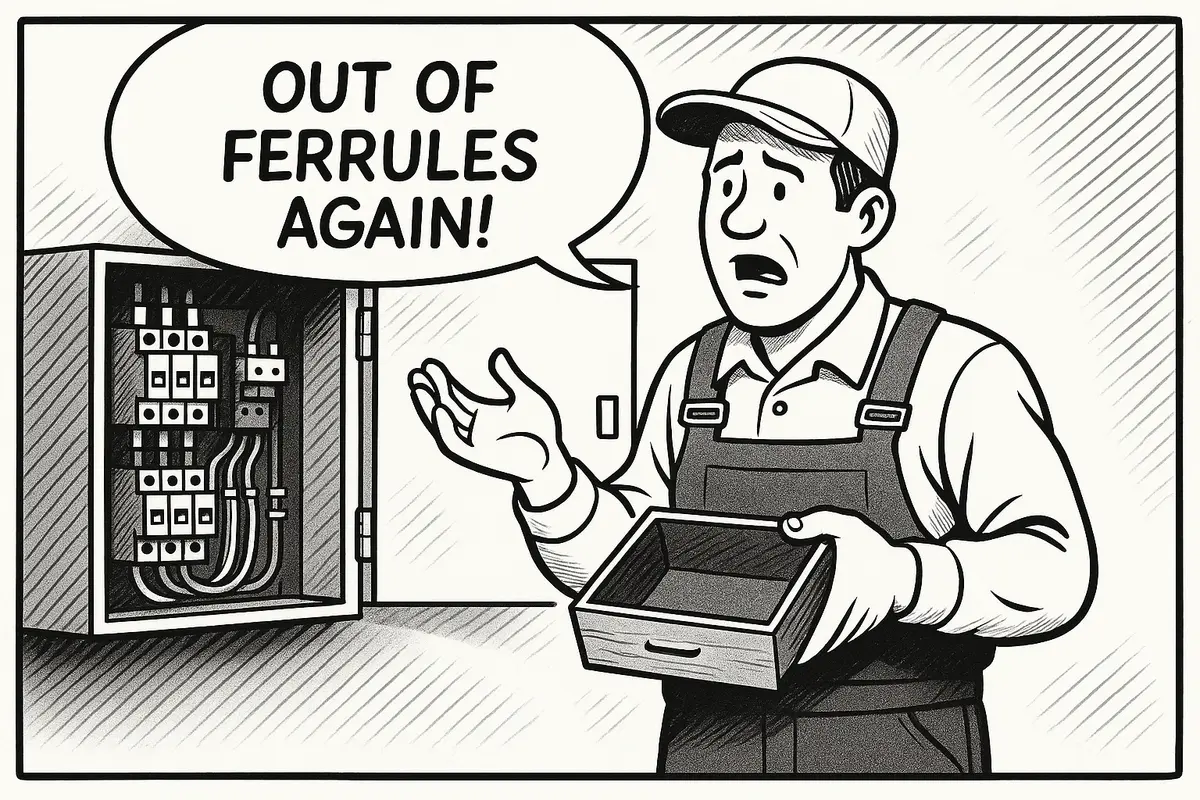
It's 4:30 PM on a Tuesday. Master electrician Thomas is standing in front of his client's control cabinet, reaching for the wire ferrules, but the box is empty. It's the third time this has happened this week. Now it's the same old story: stop work, get in the car, drive to the wholesale supplier, wait in line, pay, and drive back. Two hours are gone that he could have spent working productively.
Thomas is not an isolated case. German trades businesses regularly lose valuable hours procuring standard items that should actually always be in stock. In a time when the shortage of skilled workers is the greatest obstacle to growth, this loss weighs twice as heavy. When highly qualified journeymen or masters are misused as "courier drivers" for small parts, the company burns cash.
The Hidden Problem: Material Procurement Eats Up Work Hours
The situation in the German trades is paradoxical: order books are filled for months, and customers are desperately waiting for appointments. At the same time, many businesses waste 4 to 6 hours per week on unplanned trips to the building supply store, according to the ZDH Business Report.
According to figures from the German Confederation of Skilled Crafts (ZDH), customers wait an average of up to ten weeks for trades appointments. Every unplanned procurement trip extends these waiting times even further. It is not just a logistical problem but a massive productivity killer.
What Is Really Missing: C-Material
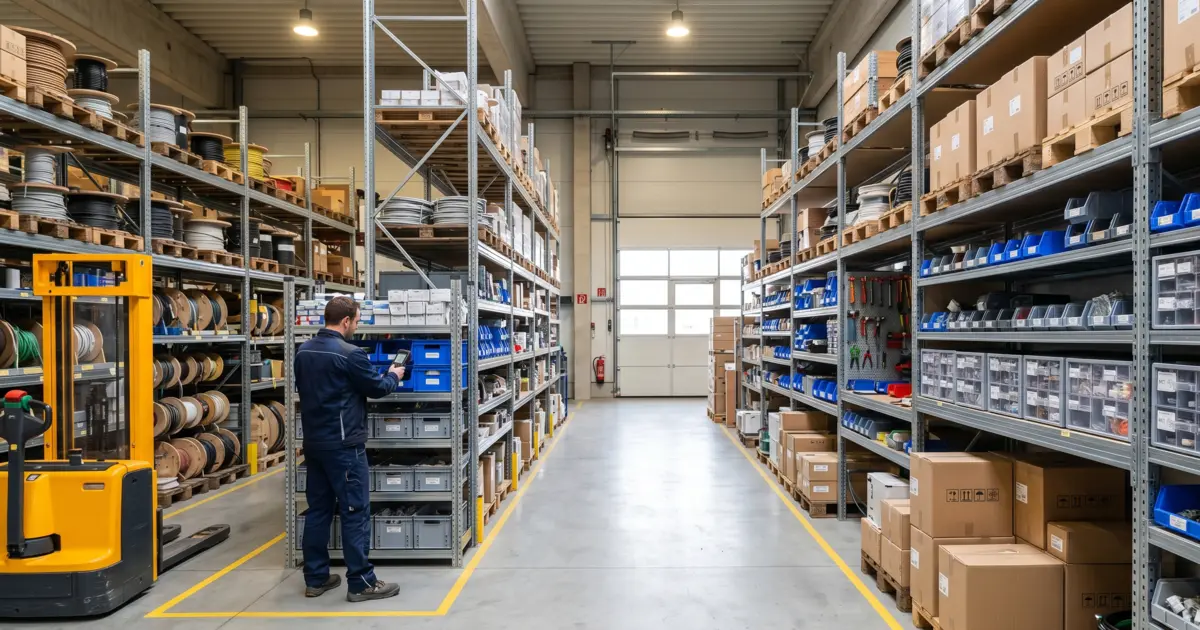
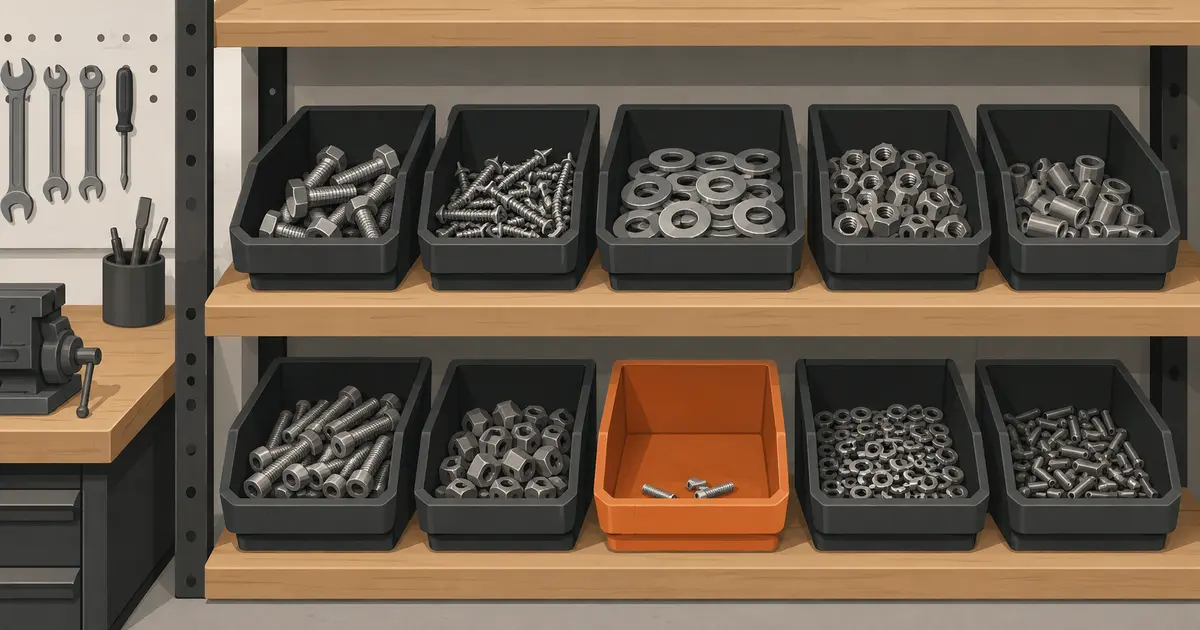
It is rarely the large components that are missing. The PV system, the heat pump, the custom-made kitchen: usually ordered with pinpoint accuracy. The problem lies in the C-material: wire ferrules, sealing rings, screws, cable ties. Small parts that are taken for granted. A missing 5-cent dowel can block a 100-euro working hour.
What Does a Wasted Hour Really Cost? A New Calculation
The financial impact is more dramatic than many business owners think. Many only count the pure loss of time. In business reality, however, we must sum three factors:
- Labor Costs: The wage including non-wage labor costs for the time of the trip.
- Vehicle Costs: Fuel, wear and tear, insurance, and depreciation of the van.
- Opportunity Costs: The contribution margin that was not earned during this time.
Average costs for a master's hour are between €85 and €115 net (as of 2026) according to ZVEH and ZDH benchmarks. If we add the lost revenue, an hour of idleness effectively costs the business €150 to €200.
Calculation Example for a 5-Person Business:
- 3 unplanned procurement trips per week, 1.5 hours each = 4.5 h
- Effective costs per hour (incl. opportunity): approx. €180
- Weekly loss: €810
- Annual loss (50 weeks): €40,500
This sum corresponds almost to the annual salary of a journeyman. In other words: the business affords an employee who is only there to manage inefficiency.
The Real Costs of a Procurement Trip Broken Down
Tradespeople tend to underestimate the duration of a procurement trip ("I'll be back in 10 minutes"). An objective measurement shows a different picture:
| Cost Position | Real Time Effort / Costs |
|---|
| Set-up time (securing the job site, coordinating with colleagues) | 10–15 min. |
| Drive to the wholesaler (city traffic/country road) | 20–30 min. |
| Search in the store, expert advice, checkout | 20–30 min. |
| Return trip to the job site | 20–30 min. |
| Resumption of work (re-concentration) | 10–15 min. |
| Total time per trip | 80–120 min. |
| Labor costs (€100/h) | €133–200 |
| Vehicle costs (Flat rate €0.50/km, 20 km) | €10 |
| Total costs per single trip | €143–210 |
Three of these trips per week therefore cost a business up to €630 weekly, which is over €31,000 per year.
The Psychological Factor: Stress and Motivation
Material shortage is not just a financial problem. It is a massive stress factor. When an employee realizes they cannot finish their work, motivation drops. The feeling of incompetence arises ("We don't have the shop under control").
For the boss, it means constant interruptions. "Boss, we're out of 3-way Wagos!" – this sentence rips the business owner out of a calculation or a customer conversation. The cognitive load from constantly "keeping-in-mind" small parts leads to burnout and errors in the core work in the long term.
Why Excel Does Not Solve the Problem (and Even Makes It Worse)
Many businesses initially try to manage material stocks with Excel lists. This fails reliably for three reasons:
- The Discipline Trap: An Excel list must be maintained manually. On the job site or in a hectic warehouse, nothing is noted down. The list becomes outdated within 48 hours.
- No Real-time Access: Excel lists are on a computer in the office. The fitter in the basement doesn't see what the colleague in the other vehicle has just taken out.
- Lack of Intelligence: Excel cannot trigger an automatic order. It always needs a human to interpret the numbers.
A more detailed analysis can be found in the post on Excel as an inventory management alternative. In short: Excel is a data grave, not process support.
Three Strategies in Comparison: The Way Out of the Crisis
| Strategy | Time Effort / Week | Costs / Year (Estimate) | Risk of Failure | Efficiency Rating |
|---|
| Reaktiv (Drive when empty) | 5–8 hours | €15,000–30,000 | Extremely High | 0/10 |
| Planned Purchase (Weekly) | 2–3 hours | €5,000–10,000 | Medium | 5/10 |
| Digital Warehouse (repleno) | < 15 minutes | €600–2,000 | Minimal | 10/10 |
The Domino Effect: Why a Missing Part Blows Up Projects
A project is like a clockwork. If one gear (a small part) is missing, the entire mechanism stops.
- Delay for subsequent trades: The electrician cannot set the boxes -> The plasterer cannot start -> The schedule for the whole house shifts.
- Contractual Penalties: In the commercial sector, delays due to material shortage can lead to expensive penalties.
- Loss of Reputation: A tradesperson who has to drive away three times looks unprofessional. Recommendations fail to materialize.
Instructions: In 5 Steps to Automatic Reordering
The switch from chaos to autopilot is easier than many think. Here is the proven how-to plan:
Step 1: The Top-50 List
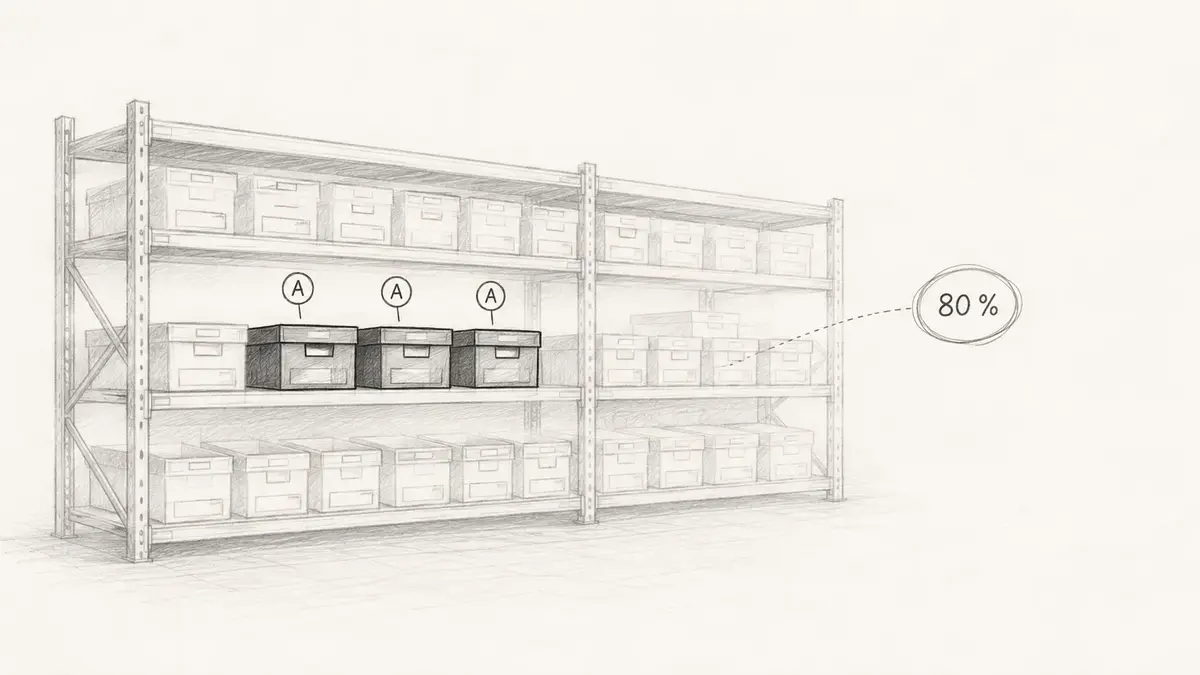
Identify the 50 items that are most frequently missing. Concentrate only on C-material. No special machines, just "small stuff".
Step 2: Define Storage Locations
Determine where this material is located. Use barcode scanning to give every storage location a unique identity.
Step 3: Set Minimum Stocks (The "Fear Limit")
Ask your fitters: "At what quantity do you get nervous?" That is your minimum stock. repleno uses this value to trigger the automatic reordering.
Step 4: Onboard the Team
Give every employee the app. Explain: "One scan saves you an hour of driving." Acceptance is immediate when the benefit (less driving) is recognized.
Step 5: Link Suppliers
Enter the email addresses of your contacts at the wholesaler. repleno sends the orders in the correct format directly to them.
Conclusion: Time Is the Hardest Currency in the Trades
The calculation at the end of the day is simple. With 3 hours saved per week and a realistic hourly rate, a business generates an additional €15,000 to €25,000 in revenue per year, just through better material availability.
Investing in modern inventory management is not an expense but a yield machine. The question is not whether automated inventory management is worth it. The question is how much longer you can afford to pay highly qualified skilled workers for errand runs.
Are you ready to stop the material shortage? Calculate your potential ROI or start directly with our pilot program. If you are still unsure which system suits you, read our comparison of the best inventory management apps for tradespeople 2026.