In 2026 a craftsman hour costs 65 to 70 euros net for journeymen and 72 to 78 euros for masters.
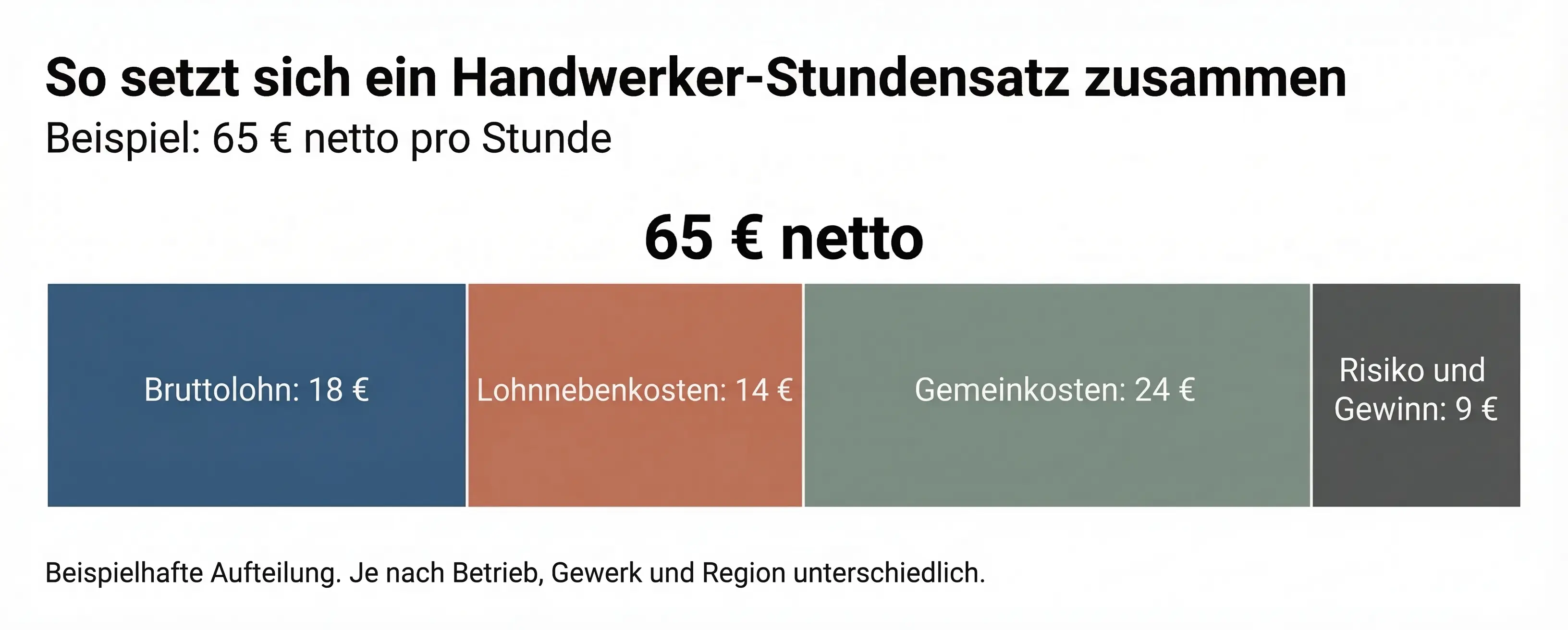
Only about 31 % of the hourly rate is gross wage. 69 % goes to social contributions, vehicles, overheads + risk
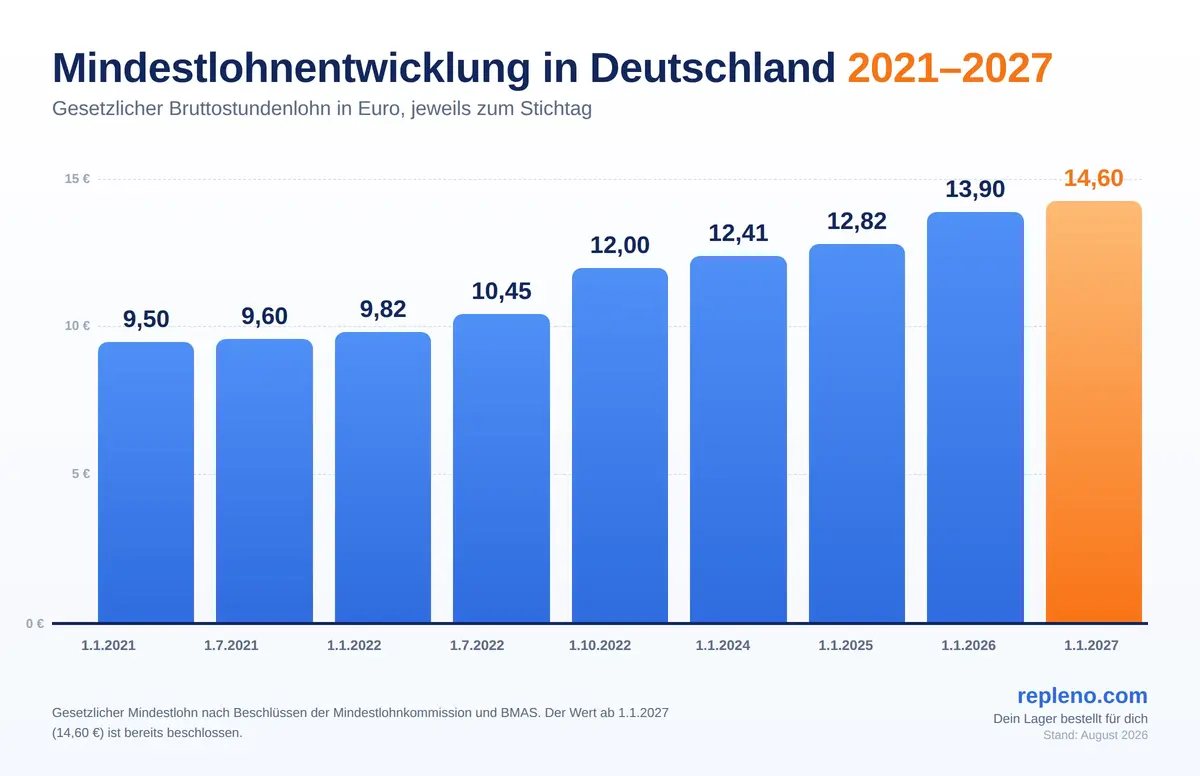
Minimum wage increase 2026 of +8.4 % to 13.90 euros drives personnel costs and hourly rates.
East/West gap is around 15 % + regional differences are additionally significant
Businesses that have not adjusted their charge-out rate in more than two years are likely pricing below cost
What Does a Craftsman's Hour Really Cost in 2026?
When customers receive a bill, the first reaction is often: "So expensive?" But many don't realize that an hourly rate of 60 to 80 euros involves much more than just the craftsman's wage. According to the German Craftsmanship Newspaper, hourly rates in 2024 ranged between 38 and 68 € net depending on the trade, averaging around 64 € for master craftsmen.
You'll learn in this post:
What a craftsman's hour costs you when you hire one and what you can charge customers if you're a craft business owner.
What the hourly charge-out rate means and how to calculate it.
Not, however, what you can earn if you're an employed craftsman.
Hourly wage vs. hourly rate: Don't confuse them. The hourly wage is the gross salary an employed craftsman earns per hour (e.g. 18 to 25 euros). The hourly rate (charge-out rate) is what a business charges customers per working hour (e.g. 60 to 85 euros). This article covers hourly rates only. What tradespeople actually earn is in our tradesman hourly wage table.
Current Hourly Rates by Trade
For orientation: The following ranges refer to hourly charge-out rates (colloquially: hourly rates) by trade.
The differences between individual craft trades are significant. The most recent cross-trade survey by the German Craftsmanship Newspaper (as of 2024) breaks down as follows:
Trade
Hourly Rate net (as of 2024)
Roofers and Carpenters
68 € (Top position)
SHK, Metalwork, Steel Construction
65 €
Electrical Engineering
64 €
Joiners/Carpenters
63 €
Painters/Plasterers/Stucco Workers
62 €
The difference between the most expensive and the cheapest trade is currently only six euros. The rates are converging.
Forecast: What Does a Craftsman's Hour Really Cost in 2026?
Due to the increase in the minimum wage to 13.90 € from 2026, rising wage-related costs and higher operating expenses, craftsman hourly rates in 2026 will likely rise by 5 to 10 %. Realistically, costs are:
a journeyman hour 65–70 € net
a master hour 72–78 € net
depending on trade and region.
Regional Price Differences Remain
The price distribution shows clear regional differences across Germany:
In major cities such as Hamburg or Munich, master craftsman hourly rates are estimated at 75–80 € net.
In rural and eastern German regions, rates can be significantly lower, often 55–65 € net.
On average, a craftsman's hour costs approximately 54 € in eastern Germany and 64 € in the west, a difference of around 15 percent.
Roofing Trade: 14.96 € (unskilled) / 16.60 € (journeyman), from January 2026
Building Cleaning: 15.00 € (interior and maintenance cleaning) / 18.40 € (glass and facade cleaning), from January 2026
Painters/Varnishers: 16.13 € (journeyman), from July 2026
Scaffolding: 14.35 €, from October 2026
How high is the minimum wage from 2026 and 2027?
The statutory minimum wage (2025: 12.82 € gross) increases to:
January 1, 2026 to 13.90 € gross per hour and to
January 1, 2027 to 14.60 € gross per hour
This is based on the recommendation of the Minimum Wage Commission and the decision of the Federal Cabinet.
Why Prices Must Rise
71 percent of the surveyed craft businesses have increased their prices. The reasons:
Shortage of Skilled Workers: 70% of businesses have job vacancies
Increased Material and Energy Costs: Super E10 alone cost around 26 percent more in early August 2026 than a year earlier: 1.680 € per litre in August 2025 versus 2.12 € on 4 August 2026, a 44 cent surcharge per litre. A service vehicle covering 20,000 kilometres a year at 9 litres per 100 km burns 1,800 litres, roughly 790 € in extra cost versus the previous year, without a single extra hour becoming billable.
Investments in Digitalization
Higher Regulatory Requirements
Time is Money, Especially in Craftsmanship
At an hourly rate of 65 €, every wasted hour costs the business real money. Typical time wasters:
Unplanned trips to the building materials supplier
Missing consumables on the construction site
Manual ordering processes
Opaque warehouse management
Digital procurement solutions like automatic reordering systems and central supplier integration significantly reduce these unproductive times. To put it in numbers: if a five-person team loses just one hour per person per week to material searches and unplanned procurement trips, that adds up to roughly 14,950 euros per year in wasted labor at a 65 euro hourly rate across 46 productive weeks.
The Chambers of Crafts recommend: Businesses should transparently show their customers how prices are composed. Those who communicate their calculations openly usually receive understanding instead of criticism.
Explaining your charge-out rate transparently significantly reduces price discussions.
Conclusion
In 2026 a journeyman's hour typically costs 65 to 70 € net, a master's hour 72 to 78 €. Roofing and electrical sit at the upper end, up to 90 €, while eastern Germany runs around 15 percent lower. Of that customer price the journeyman himself earns 18 to 25 € gross; the rest covers payroll overheads, vehicles, tools, insurance and the many hours no customer pays for: travel, quotes, downtime, holiday.
For customers that means 2027 will likely be more expensive. The statutory minimum wage rises by 5.0 percent to 14.60 € on 1 January 2027, and fuel costs add to the calculation: diesel hit an all-time high of 2.45 € per litre in April 2026 and has settled at around 2.15 € since. Realistically, charge-out rates will rise by 3 to 5 percent on average: 65 € becomes 67 to 68 €, 78 € becomes roughly 80 to 82 € net.
This is not a blanket price increase for every business. But anyone who wants to keep qualified staff, run vehicles and honour warranty claims cannot absorb rising costs indefinitely. The 2027 minimum wage is decided; the energy side is the uncertain part of the forecast.
FAQ: Master and Journeyman Hourly Rates in Craftsmanship 2026
In 2026, craftsman hourly rates in Germany are usually between 60 and 85 euros net. The specific price mainly depends on the trade, region, and qualification.
The price difference is smaller than many expect. Master hours are on average only a few euros above journeyman hours, as both carry similar overhead costs.
More costly trades include roofers, carpenters, SHK, and electrical work. The reason is less the wage, but high material, machinery, and liability costs.
Rising minimum wages, higher fixed costs, and skilled worker shortages affect all industries. This reduces price differences between trades.
Wages only make up a small part of the hourly rate. The larger share goes to social contributions, downtime, vehicles, tools, rent, administration, and business risk.
Yes. In major cities and economically strong regions, hourly rates are significantly above the national average, while rural or eastern German regions are cheaper.
In short: yes. Rising wages, energy prices, material costs, and legal requirements leave businesses little room to keep prices stable.
Rising minimum and industry wages directly increase personnel costs. These inevitably result in higher hourly rates with some delay.
At hourly rates of over 60 euros, every unproductive hour immediately causes measurable costs. Especially expensive are unnecessary trips, missing materials, and manual procurement.
Not primarily through higher prices, but through time savings and better organization. Digital processes reduce idle time and improve hourly profitability.
Experience from the chambers of crafts shows: Yes, if prices are explained comprehensibly. Transparency reduces discussions and builds trust.
The hourly wage is the gross salary an employed craftsman earns (e.g. 18 to 25 euros per hour). The hourly rate (charge-out rate) is the price a business charges customers per working hour (e.g. 60 to 85 euros). The hourly rate includes not only the wage but also social contributions, overheads, risk, and profit.
They are often used interchangeably; strictly speaking, the charge-out rate is the costing basis from which the billed hourly rate is derived.