

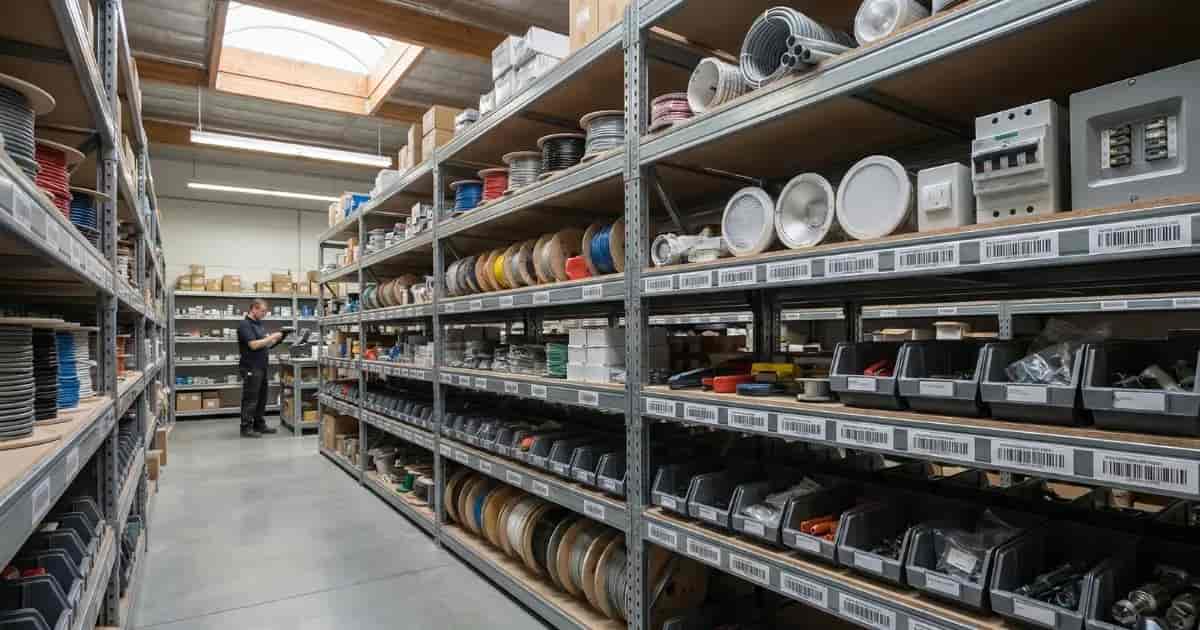
Barcode labels straight from your item data
Label shelves, storage bins and containers with labels from your item data. Designing and printing takes seconds.




Designing labels in repleno
You design your labels right in the browser.
How to create labels
Three steps from item to label.
Pick the format that fits your labels: a ready-made sheet from Avery Zweckform or Herma, or plain paper.
QR code, EAN-13 or Code 128: pick the right type and drag it onto the label together with item name, number or storage bin.
repleno creates a print-ready PDF with your labels. You print it and stick the labels on.
- Meyer LabelAvery L4785 · 80 × 50 mm
- New templateAvery L4785 · 80 × 50 mm
- StandardExampleAvery L4785 · 80 × 50 mm
- CompactExampleAvery 7162 · 99.095 × 33.902 mm
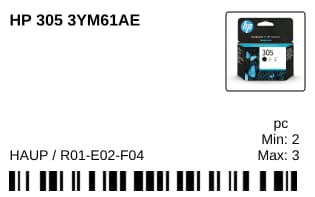
Design labels in 20 seconds
Create a template, add item data, save as PDF and print.
Demo: Creating QR code labels & barcodes in 20 seconds
Available fields
Barcode, QR code, item data, item image, company logo, free text: drag every field wherever you want it.
Barcode / QR code
EAN-13, Code 128, or QR code. Generated automatically from your item number or EAN.
Item data
Item name, item number, supplier, storage bin, EAN. Inserted automatically from your item data.
Item image
The product image from your item data lands on the label automatically.
Company logo
Upload your company logo and place it on the label.
Free text
Any text, e.g. department name or notes. Font size is up to you.
The benefits of label creation in repleno
So everyone finds the right item on the shelf and books it out cleanly.
Order on shelves and storage locations
Shelves, storage bins and containers are clearly labeled.
Your team finds items faster
Whoever comes into the stock room finds the item by its label and does not have to ask.
Fewer booking errors
The barcode or QR code on the label links the storage bin to the item. When you scan, repleno books the item whose label you scanned.
Design and print right in repleno
You design labels in a few clicks and print them on the office printer you already have.
Customer testimonial from Elektro-Montagen Schulz
“As we grew, our warehousing had to grow up with us. With repleno our team can see straight away what we have and where it is. And we get a heads-up before material runs short.”
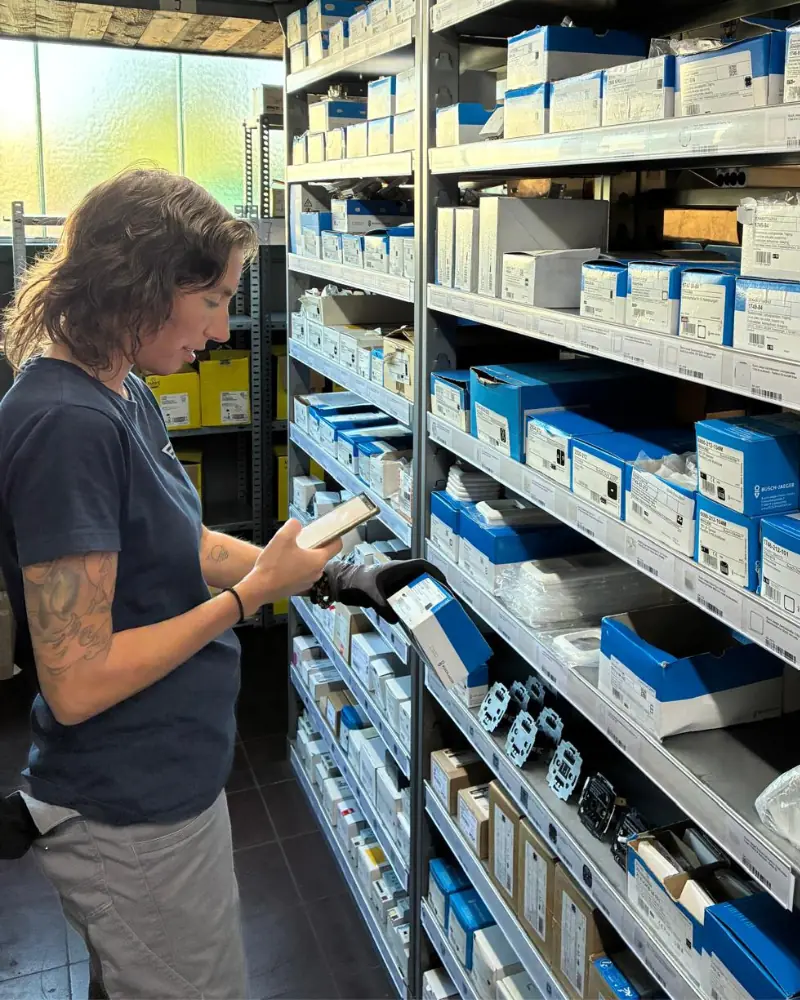
Customer testimonial from Horst Filipp GmbH
“Our cutting tools were spread across three storage locations, and stock wasn't tracked. With repleno we consolidated them and now know in time when something runs low. That way we can reduce stock without risking a missing tool that leaves a machine standing idle.”
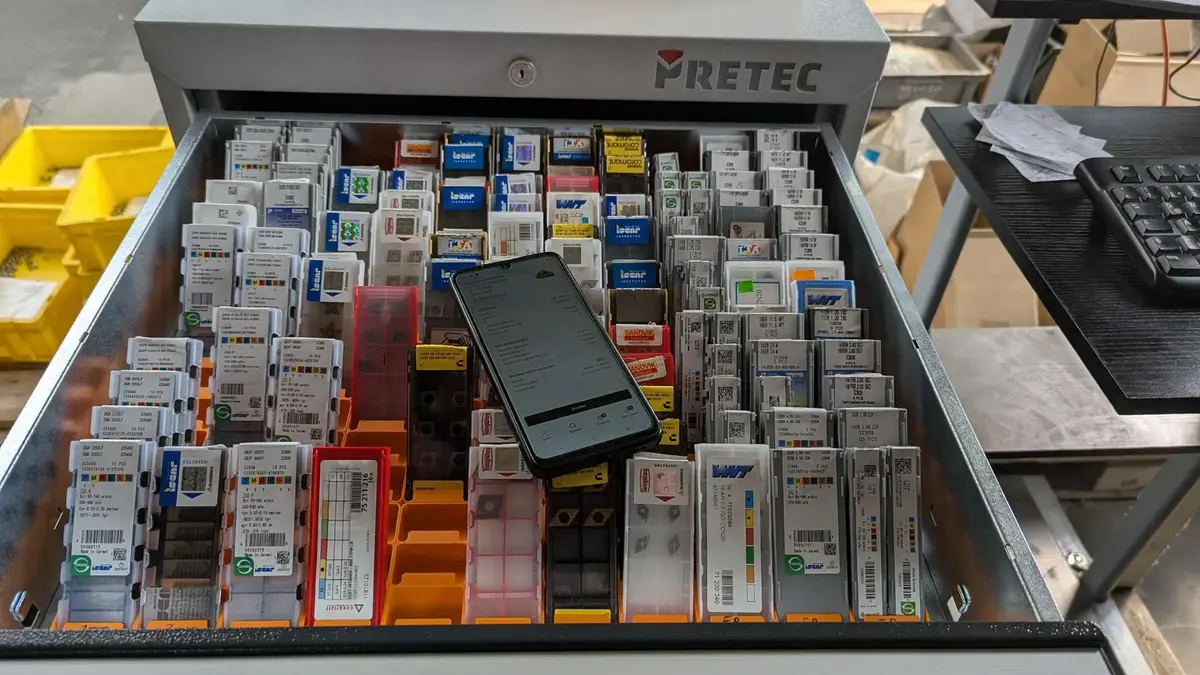
Customer testimonial from anju conceptstore
“It's super easy, so the whole team actually uses it. No more scraps of paper and Excel sheets!”
Designing and printing labels for my warehouse is far too much work.Until now.
A good label must not cost more effort than it saves later.
| Worries | With repleno |
|---|---|
I'd have to record everything cleanly before I can print. | You do have to capture your items once, and AI makes that faster. Then you label your stock room shelf by shelf. |
My people don't stick to new order. | A label disciplines no one, but it makes the right shelf the easy choice: at the rack everyone sees at once what belongs there. |
When something changes in the warehouse, I can start all over. | You change the affected label and reprint only that one. |
I'm not a designer. | You do not need to be. You take a template and adjust it in a few clicks if you want. |
Common questions about labels & barcodes
Which printers work?
Which label sheets are supported?
Do I have to buy special label sheets?
Does it cost extra to design and print labels in repleno?
Can I create custom templates?
QR code or barcode: which should I use?
What are barcode labels?
Why not just create labels in Word?
Add your first 50 items for free.
No credit card. No time limit.
More repleno features
Scan a barcode, paste a product link or text: the AI creates the item with name and data. Import entire stock lists via CSV.
Maintain all item master data in one central place.
Extend items with your own fields like manufacturer, serial number, or sales price.
Manage suppliers centrally and assign several per item. The demand report shows you right away where to order.
Manage the same item across multiple storage locations, with its own stock level and bin at each one, and transfer stock between them.
Let repleno find matching product images for you, without having to upload them yourself.
Create assemblies and kits. Production increases the stock of the finished item, and kit withdrawals book the components directly.
Manage access and roles so everyone on the team sees exactly what they should.
Learn moreA device in the warehouse that the team shares without personal logins: unlocked with a name and PIN and straight into stock management.
Book consumption, receipts and stock corrections in seconds. By barcode or QR scan, or simply through search, no barcode needed.
Learn moreBook goods receipts directly against open orders and keep stock up to date immediately.
Book material directly to projects or customers and track clearly where it was installed.
Staff request missing material in the app, with quantity and a note. The admin sees the request right away and takes care of it.
Book material consumption to cost centers and export the report for accounting, DATEV or SAP.
Keep an eye on your material: everyone sees on their phone or PC what's in stock, what's on the way and what needs reordering soon, in real time.
Learn moreGet notified the moment an item drops below its reorder point, in the app and by email.
Learn moreWhen an item drops below its reorder point, repleno emails the order to the supplier, bundled and with minimum order value. Optionally only after your approval.
Learn morerepleno prepares orders, and you approve them before they go to the supplier.
Find slow movers, optimize stock value and spot dependencies on individual suppliers.
Learn moreEvery booking and every change to item data stays traceable, with timestamp and user.
Unmarked features are included in every plan, Free included. See pricing
Find out what AI says about repleno.
One click, and ChatGPT, Claude, Gemini or Perplexity give you their take.