

Minimum Stock and Automation
Understand how repleno uses reorder points, minimum stock, and maximum stock levels to detect demand before a stockout occurs.
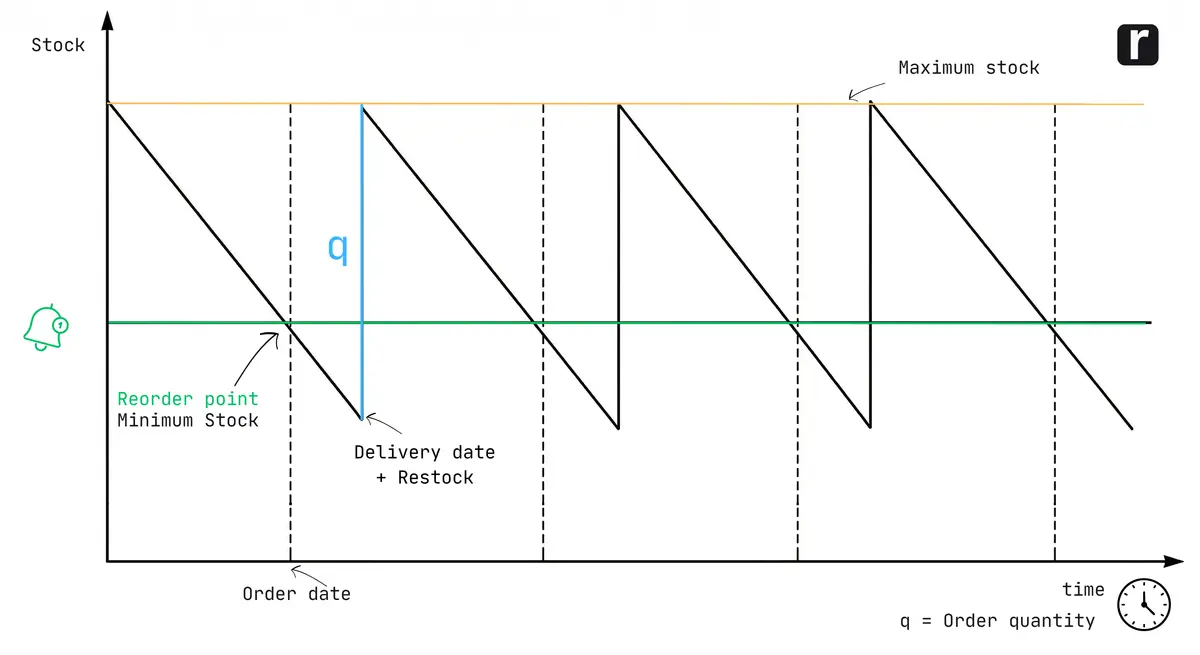
When stock reaches the reorder point, a demand is created automatically. At the next dispatch time, that demand becomes a purchase order.
The relevant parameters
repleno stores two values per item:
- Reorder point (also called: Meldebestand) marks the level at which the system must act.
- Maximum stock describes the level up to which restocking happens.
Minimum stock and safety stock
Classical inventory theory additionally distinguishes a minimum stock (also called: safety stock): the reserve below which an item should not permanently fall. repleno does not model this as a separate field. The reserve is built into the reorder point itself:
Reorder point = consumption during lead time + safety stock
If you want to deliberately secure a safety stock, raise the reorder point accordingly.
What repleno derives from this
At every relevant stock movement, repleno checks the current level against reorder point and maximum stock. When stock falls to or below the reorder point, a demand is created automatically. The order quantity equals maximum stock − current stock. At the next dispatch time, that demand becomes a purchase order.
Updated: