What Is a Stockout?
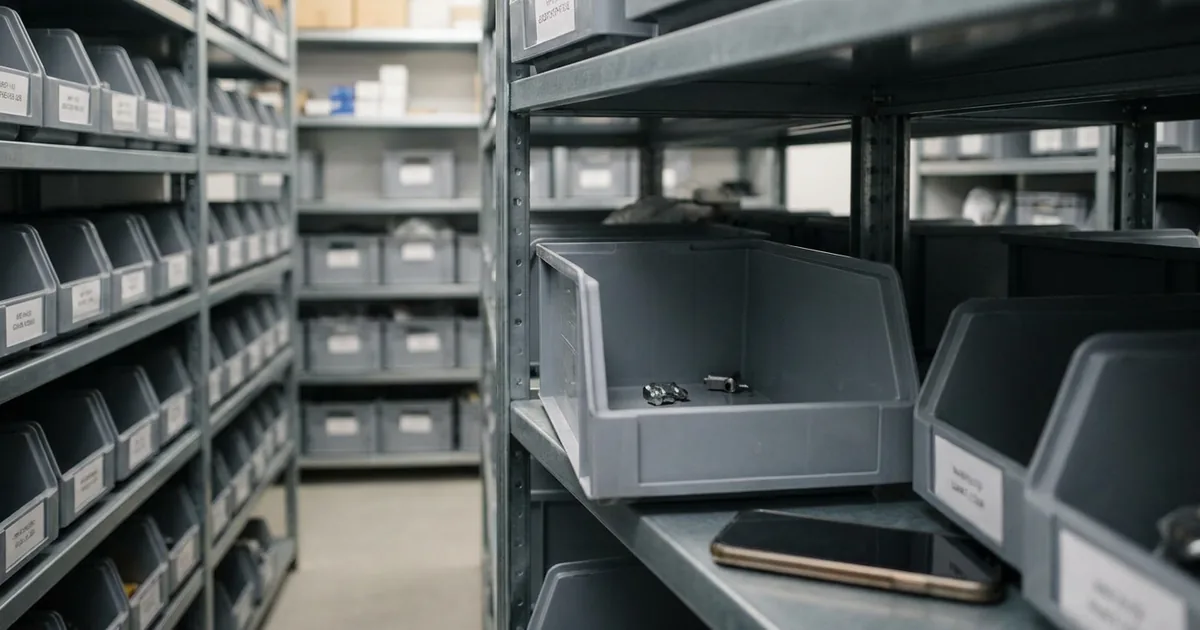
A stockout is a component, material, or item that is needed for a job, production step, or service call but is not available in sufficient quantity at the required time. The test is simple: does the planned work have to wait for the item?
This stockout definition applies across industries. In manufacturing, a missing assembly can block a production order. In field service or on a jobsite, it may be only a connector, seal, or cable. The result is the same: work waits for material.
An inventory shortage, by contrast, is only an inventory condition. It becomes a stockout when a specific demand cannot be covered. That is why a quantity of zero can be harmless, while one missing item can create an expensive bottleneck even though the system still shows one unit on hand.
What Causes Stockouts?
Stockouts occur when demand, inventory, and replenishment do not reflect the same reality. Common causes are:
- Incomplete consumption records. Withdrawals, scrap, or transfers are missing from the inventory record. The book quantity no longer matches the shelf.
- No replenishment rule. Without a trigger such as a reorder point or min-max level, people order only when the item is already needed.
- Underestimated lead time. The reorder point covers average consumption but not delayed deliveries or spikes in demand.
- Unclear material release. In manufacturing, bill-of-material, version, or approval information may be missing. In an operating stockroom, ownership and storage location are often unclear.
- No prioritization. Teams treat every inventory shortage alike, even though an item with an approved substitute is very different from an item with none.
Three Inventory Views You Must Not Confuse
Physical inventory tells you only what is on the shelf. Available inventory deducts quantities already reserved for other orders. Expected inventory adds open purchase orders and planned receipts. For a stockout, available inventory at the required date is what matters.
Ten components may be in the stockroom, but eight are reserved for a released production order. Only two are available for a new order. Anyone looking only at physical inventory misses the stockout before scheduling. The same applies in field service: material in a colleague's vehicle is not automatically available for the next job.
What Makes a Stockout Critical
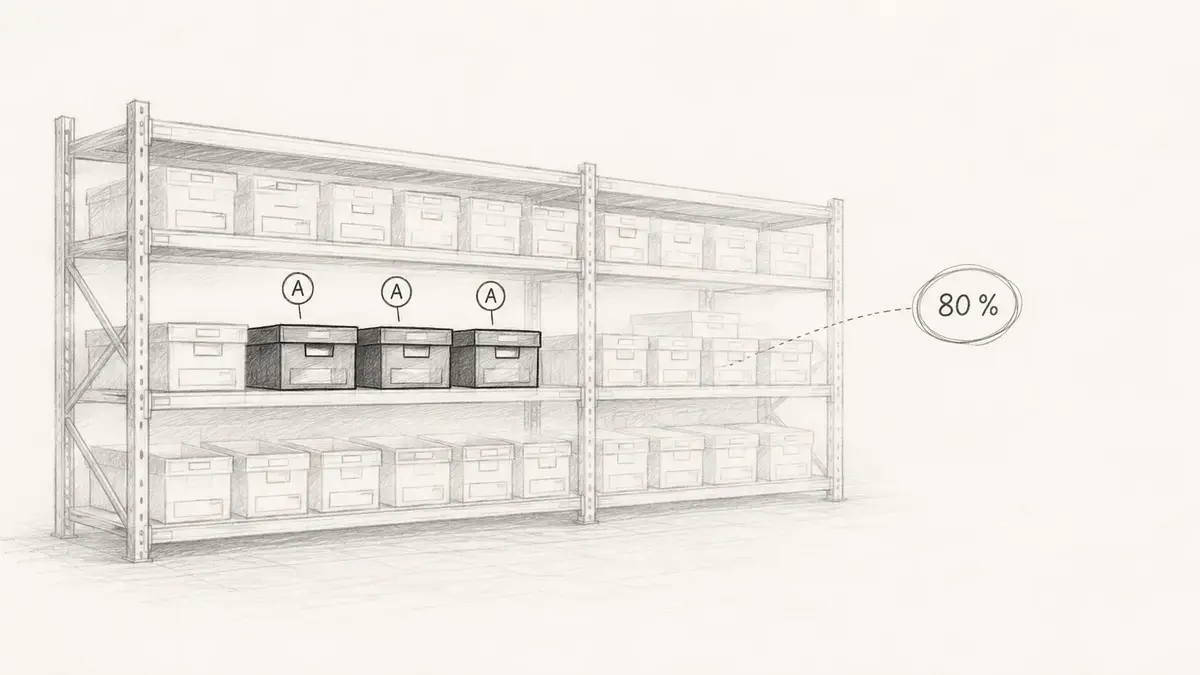
An expensive item can be low risk when a substitute is available or it is ordered well before it is needed. A cheap C-part, however, can stop a job when it is used frequently, replenishment starts too late, and no substitute exists. Criticality comes from four factors: consumption, lead time, substitutability, and the effect on the downstream process.
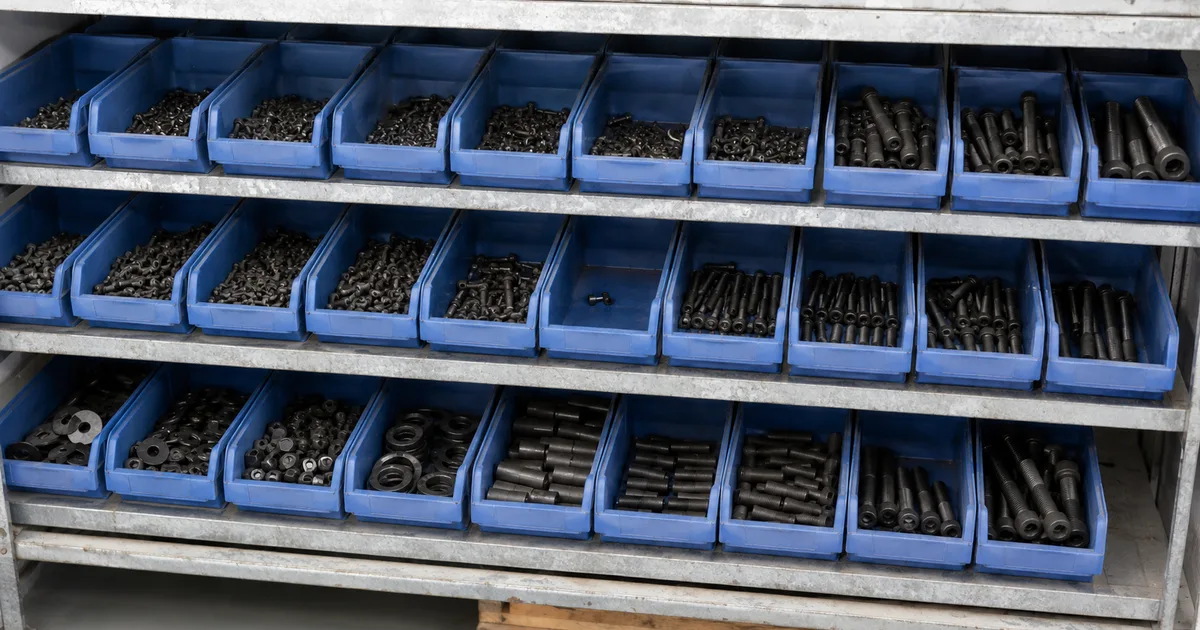
At a listed machinery manufacturer I supported during my career, production lines repeatedly risked stopping because HellermannTyton cable ties were unavailable: a typical C-part. It kept recurring until the issue reached management. The unit price was never the point. The company then improved its C-parts stockroom and procurement process.
That is how a useful stockout list should be ordered: first comes the item that stops production, a customer job, or service first. The missing quantity alone says little about priority.
What Does a Stockout Really Cost?
The part price is only a small part of the cost of a stockout. A robust model separates three positions:
- Downtime: employees, machines, or downstream processes wait for the item.
- Emergency procurement: express shipping, a special trip, extra goods receipt, or changeover.
- Downstream cost: a delayed job, lost output, contractual consequences, or lost contribution margin.
The first two positions can be calculated directly. Include downstream costs only when your business can quantify them for the specific case. Otherwise, a useful calculation becomes false precision.
A conservative example you can recalculate:
- 3 unplanned supply runs per week
- 90 minutes of interruption per trip
- EUR 60 cost per productive hour
- EUR 10 direct travel cost per trip
- 46 working weeks
That equals EUR 300 per week and EUR 13,800 per year. This is the small-scale case and a lower bound: machine downtime, express surcharges, and lost contribution margin are not included.
If 90 minutes sounds high, measure the whole trip: securing the work, travelling there, finding the item, travelling back, and resuming the work easily add up to 80 to 120 minutes. For your own cost of stockout, calculate (interruption time × cost rate) + emergency procurement + verifiable downstream costs.
In manufacturing, the scale changes. When a line stops, lost contribution margin, the idle time of several people, and delayed delivery dates add up; contract work can also add penalties. According to ABB's 2023 Value of Reliability study, unplanned downtime costs German industry around EUR 147,000 per hour on average. The actual figure can be far lower or far higher, depending on the plant.
Some costs sit outside any calculation. A customer whose job is postponed for the third time may give the next job to someone else, skip a recommendation, or leave a poor review. These effects are hard to price precisely, but over time they can outweigh the hours in the calculation.
What Is Stockout Management?
Stockout management covers the measures a business uses to detect, prioritize, and prevent stockouts. In industry, this combines availability checks, a stockout list, material planning, and escalation. Smaller teams can apply the same logic more simply.
The core is four questions: What demand is coming and when? What inventory is actually available? Which items are critical? Which rule triggers replenishment in time?
A stockout list makes the bottleneck visible. At minimum, it needs the item, missing quantity, required date, affected order, delivery date, owner, and priority. The team can then decide whether to use a substitute, reschedule, expedite procurement, or escalate to the supplier.
The sequence prevents expensive reflexes. First check whether stock is available at another approved location. Then consider a technical substitute or a change to the order. Only then order urgently or escalate to the supplier. Not every inventory shortage should become an emergency purchase.
For recurring items, an availability check connects these decisions to demand. It asks whether the required quantity will be available on the date of each order. This is where reorder points, min-max, and safety stock work together.
Why a System Alone Does Not Prevent Stockouts
Stockouts begin in the process. If you do not track inventory at all, there is no trigger for replenishment. If you use Excel, inventory software, or an ERP, every withdrawal still needs recording and every reorder point needs maintenance. Otherwise, the system shows a number that no longer matches the shelf, and the shortage appears only when someone reaches for the item. Usually too late.
In the trades, this is part of a broader implementation gap. A Bitkom study reported by Deutsche Handwerks Zeitung found that 89 percent of surveyed businesses see digitalization as an opportunity, but often do not implement it consistently. That does not explain every stockout, but it describes a common obstacle when moving from informal calls to reliable processes.
How Can You Prevent Stockouts?
Several methods work, depending on consumption and demand:
| Method | Best for | Limitation |
|---|
| Reactive buying | Unpredictable one-off needs | The bottleneck becomes visible only when work is waiting |
| Kanban | Bulk items with steady consumption | Variable demand needs an additional buffer |
| Reorder point | Items with a clear ordering threshold | Needs current inventory and maintained lead times |
| Min-max | Variable, recurring demand | Needs maintained minimum and maximum levels |
Start the move to inventory-led replenishment with the most critical items:
- Step 1: Record stockouts. For four weeks, capture every bottleneck with item, quantity, required date, and impact.
- Step 2: Assess criticality. Mark items with no substitute, a long lead time, or a large impact on downstream processes.
- Step 3: Standardize locations and data. Clear storage locations, item numbers, and barcodes prevent stock that exists from remaining unfound.
- Step 4: Set a replenishment rule. Set a threshold that covers expected consumption during lead time and a safety buffer. Review it using actual consumption and lead-time data.
- Step 5: Check availability. Regularly review open orders, substitutes, and items needed in the coming days.
For small businesses moving from Excel, WhatsApp, notes, and verbal requests to a simple system, a comparison of inventory management apps for trades can help.
Conclusion
A stockout costs far more than the item itself: working time, delayed jobs, and, in the worst case, an idle production line. Prevention means knowing three things: what is really on the shelf, what will be needed when, and which items stop the business when they are unavailable. Add a fixed threshold that triggers a reorder or alert before the last units disappear. That prevents more stockouts than simply filling another shelf with safety stock.
The example is deliberately conservative: three supply runs per week already cost EUR 13,800 per year. Every business should calculate with its real interruption time and cost rate. More hidden drivers are covered in our guide to lowering warehouse costs in the trades.
Use the ROI calculator with your own assumptions to see how much your business could avoid.